SOLVE | Derived TRACE™
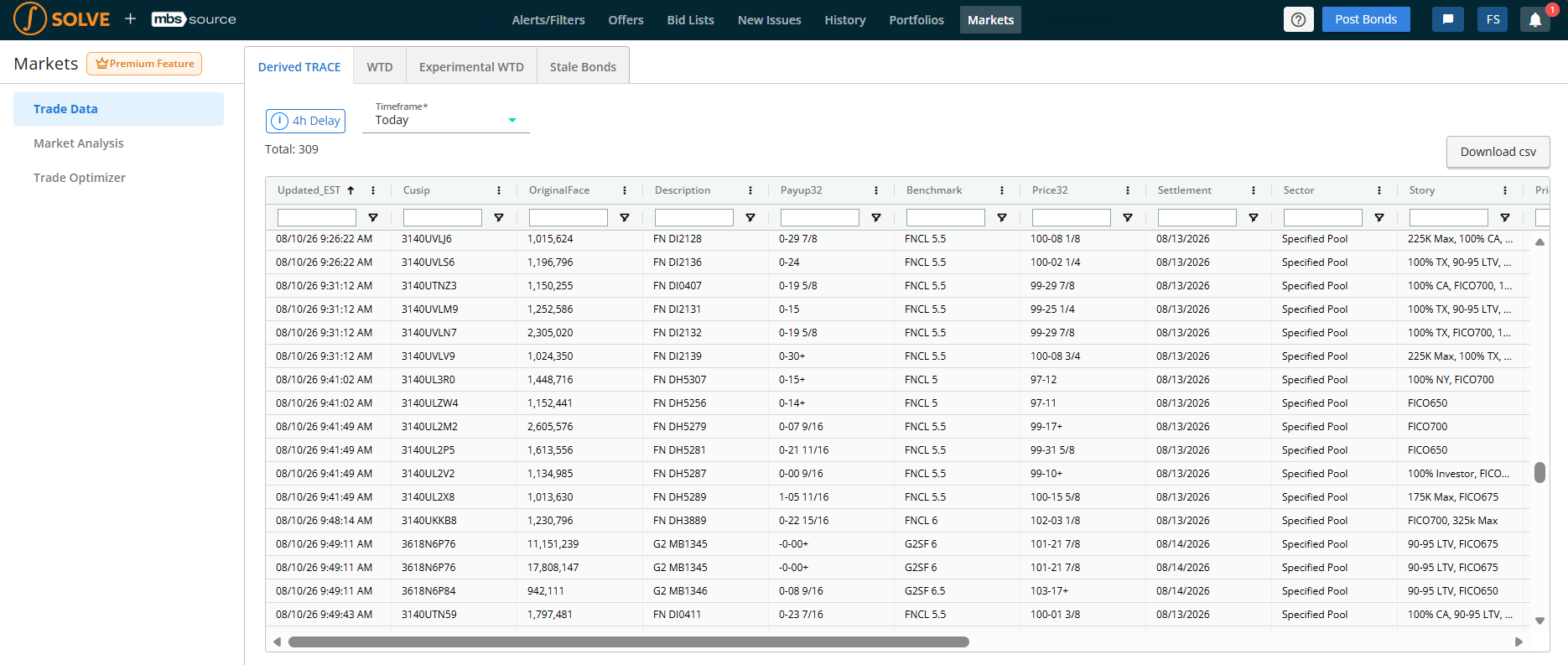
Derived TRACE uses proprietary mapping to identify the likely specified pool behind masked TRACE-reported trades. By connecting RDID-level TRACE activity with probable collateral, traders gain additional context to support structured products analysis and price discovery.
OVERVIEW
Specified-pool investors need deeper visibility into the collateral behind every trade. However, certain TRACE transactions are reported using a Reference Data Identifier (RDID) instead of the individual security identifier, limiting the ability to identify the specific pool associated with the trade.
Derived TRACE uses proprietary, AI-driven matching technology to analyze RDID-level TRACE activity and determine the most likely underlying security. By evaluating factors such as cohort membership, trade characteristics, pool attributes, trade size, and other market signals, Derived TRACE converts previously masked TRACE data into more actionable specified-pool intelligence.
With greater security-level transparency, investors can better analyze market activity, evaluate relative value, assess liquidity, and make more informed trading decisions.
When TRACE masks the pool, Derived TRACE helps reveal the story behind the trade.
Markets Covered
Derived TRACE is purpose-built for agency specified pools, where differences in underlying collateral characteristics can significantly impact valuation, liquidity, and relative value. The solution provides enhanced visibility into specified-pool activity across agency mortgage markets, including:
Fannie Mae and Freddie Mac specified pools where differences in underlying collateral characteristics create distinct valuation and relative value opportunities.
Government-insured mortgage pools where factors such as geography, loan characteristics, and seasoning can influence pricing and market value.
Specified pools differentiated by collateral attributes including geography, loan balance, borrower profile, loan age, LTV, FICO, and other characteristics that may impact performance and valuation.
Eligible specified-pool transactions reported under a Reference Data Identifier (RDID) rather than the underlying pool, providing enhanced visibility into otherwise masked market activity.
Benefits
-
Reveal More Actionable TRACE Trade Intelligence
Move beyond broad RDID cohorts with a more precise view of the likely security associated with a trade, helping investors better understand underlying market activity.
-
Improve Specified-Pool Trade Transparency
Evaluate whether a trade reflects specific collateral characteristics, pay-up dynamics, or the underlying pool story driving market value.
-
Reduce Manual TRACE Trade Mapping
Replace time-consuming trade investigation and security mapping processes with proprietary, data-driven matching.
-
Strengthen Specified-Pool Relative-Value Analysis
Compare clearing levels across more precise specified-pool characteristics rather than relying solely on broad cohort-level analysis.
Use Cases
-
Identify the Likely Traded Specified Pool
Analyze RDID-level TRACE transactions to determine the most likely specified pool associated with the trade, providing greater visibility into underlying security activity.
-
Analyze Specified-Pool Characteristics and Performance
Evaluate trade activity across specified pools differentiated by collateral characteristics such as geography, seasoning, borrower profile, loan balance, and other attributes that may influence valuation.
-
Assess Specified-Pool Pay-Ups and Relative Value
Compare likely clearing levels across similar specified pools to identify where collateral differences, pool characteristics, or market demand may be reflected in pricing.
-
Enrich MBS Market Color and Trade Context
Combine inferred security-level TRACE activity with BWICs, dealer offerings, and historical pricing context in SOLVE | MBS Source to develop a more complete view of market dynamics.
Features
-
RDID-to-Security Mapping for TRACE Data
Identifies the most likely specified pool associated with RDID-level TRACE activity, transforming masked trade data into more actionable security-level intelligence.
-
AI-Driven TRACE Trade Matching Analysis
Uses proprietary, AI-driven analysis to evaluate available signals including cohort membership, trade characteristics, collateral attributes, trade size, masking considerations, and other market data inputs to determine the most likely security match.
-
Specified-Pool Intelligence for Agency MBS Markets
Purpose-built for agency mortgage markets where broad cohorts may hide meaningful collateral differences that influence valuation, liquidity, and relative value.
-
Confidence-Based Security Match Insights
Provides confidence-based insights into inferred security matches, helping users interpret derived mappings while distinguishing analytical results from official security records.
-
Integrated MBS Market Context and Trade Intelligence
Connects inferred TRACE activity with reference data, dealer offerings, BWIC history, and historical market color to provide a more complete view of mortgage market activity.
FAQs
-
What Is Derived TRACE?
Derived TRACE is an analytical solution that uses proprietary, AI-driven matching logic to identify the most likely security associated with RDID-level TRACE activity. It helps specified-pool investors gain greater visibility into masked transactions and better understand the underlying collateral driving market activity.
-
How Does Derived TRACE Work?
Derived TRACE analyzes available market signals, including cohort membership, trade characteristics, collateral attributes, trade size, masking considerations, and other data inputs to determine the most likely specified pool associated with an RDID-level TRACE transaction.
-
What Is an RDID in TRACE Reporting?
An RDID (Reference Data Identifier) is used to report certain TRACE transactions without disclosing the individual security that traded. While RDID reporting provides transaction transparency, it can limit visibility into the specific pool behind the trade. Derived TRACE helps bridge this gap by providing an analytical view of the likely underlying security.
-
What Markets Does Derived TRACE Cover?
Derived TRACE is purpose-built for agency mortgage markets, including UMBS specified pools, Fannie Mae and Freddie Mac specified pools, Ginnie Mae specified pools, and other specified pools where collateral characteristics can influence valuation, liquidity, and relative value.
-
How Does Derived TRACE Improve Specified-Pool Analysis?
Derived TRACE helps investors move beyond broad RDID cohorts by providing greater visibility into the likely pool behind a transaction. This enables more precise analysis of collateral characteristics, pay-ups, clearing levels, and relative value opportunities.
-
Is Derived TRACE an Official Identification of the Traded Security?
No. Derived TRACE provides an analytical indication of the most likely security match based on available market data and proprietary matching logic. It is designed to enhance market intelligence and analysis, not replace official TRACE reporting or security records.
Related Resources
-
Fact Sheet
Derived TRACE
-
Fact Sheet
TRACE Activity Feed
-
Fact Sheet
TBA Monitor
-
Article
Making Fixed Income More Transparent: A Look Back at 2025