
Financial Tremors: U.S. Banking Industry Facing Increased Risk in Aftermath of Silicon Valley Bank’s Collapse

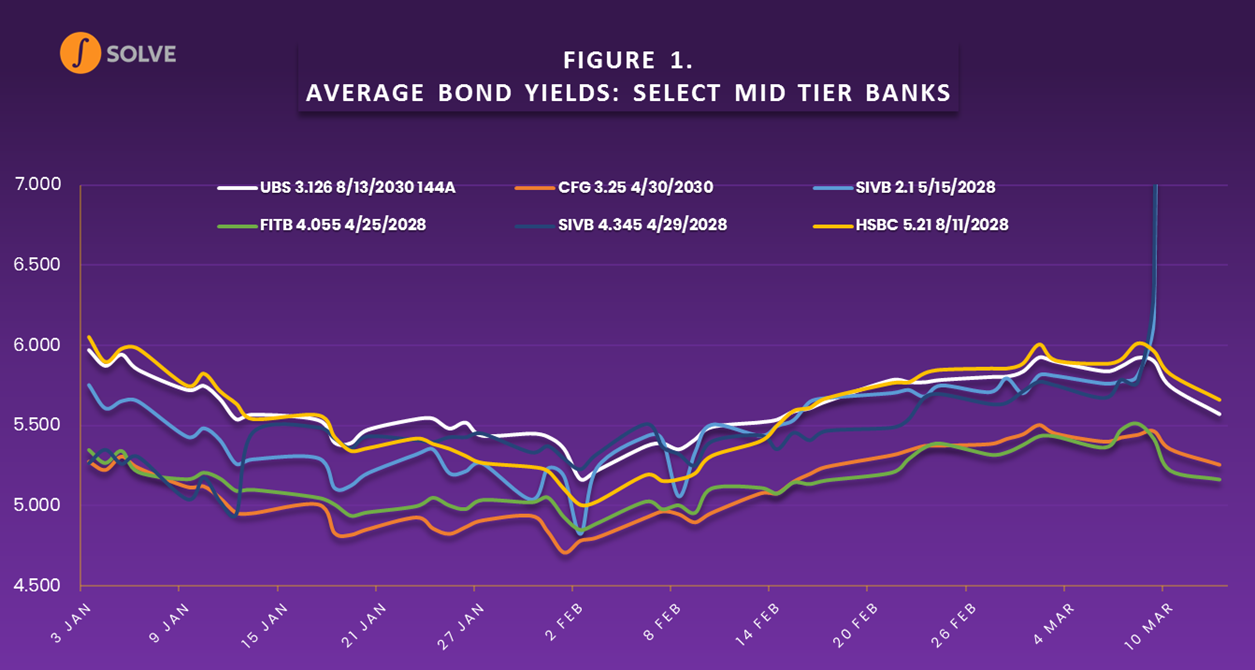
By Solve Fixed Income The Banking sector has been feeling the effects of the sudden collapse of Silicon Valley Bank, the 18th largest bank in the country. Solve’s Fixed Income market data shows how different tiers of banks in the U.S. have been affected (Figures. 1-3). Yields for bank issued debt, which had been trending lower earlier in the year, saw an uptick in February until the collapse of Silicon Valley Back. Since last Thursday, most mid-tier banks have seen an upturn but have since reverted to their prior levels. However, Silicon Valley Bank debt yields skyrocketed in lieu of the diminishing trading value (Figure 1).
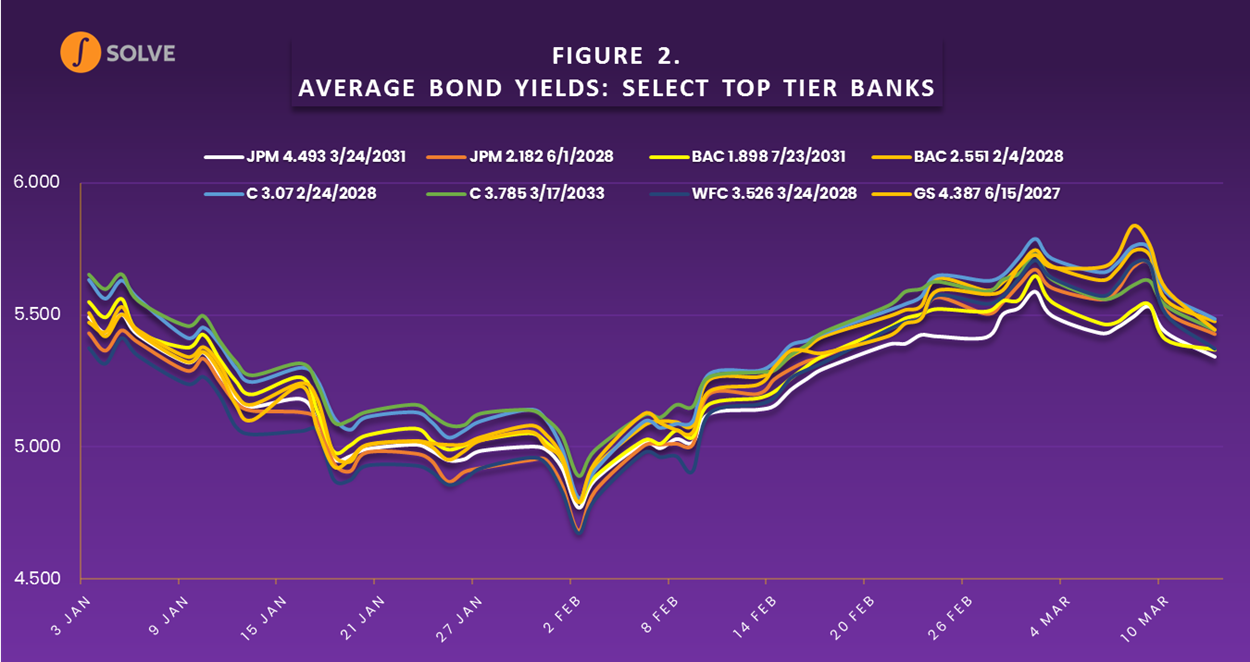
Bonds for top tier banks have been marginally less sensitive to the current situation, with yields falling just slightly in the past few business days (Figure 2).
Here
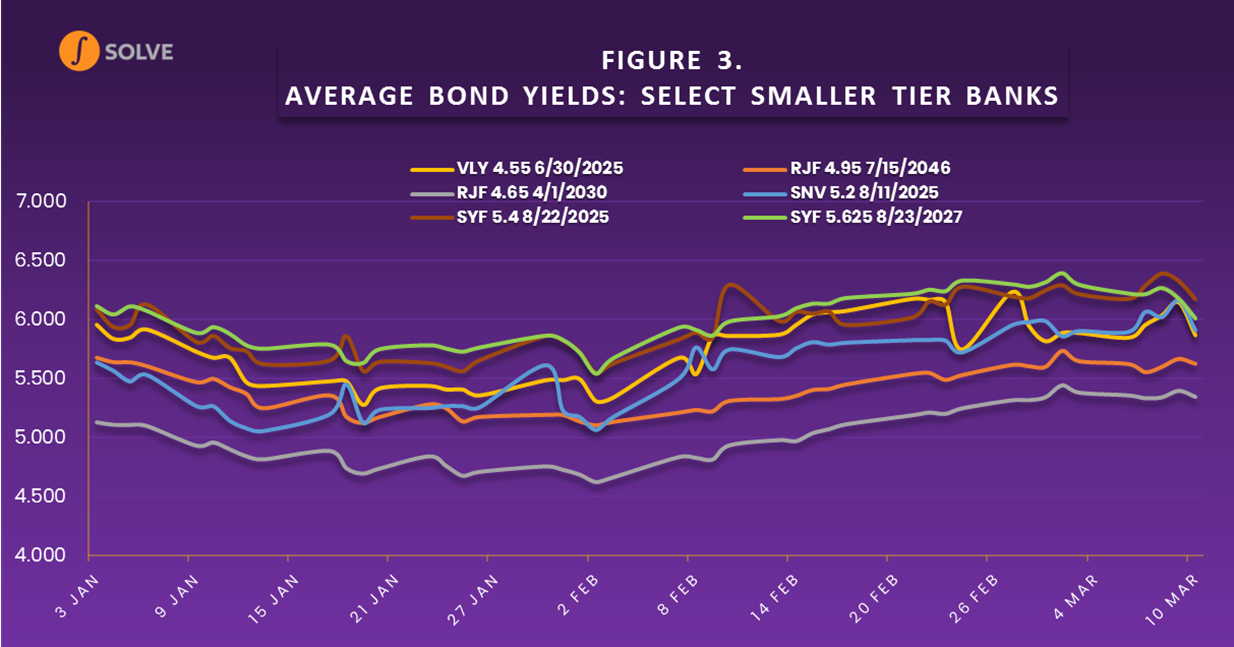
Smaller banks have been a little steadier overall, with yields remaining close to what they were in early January (Figure 3).
Here
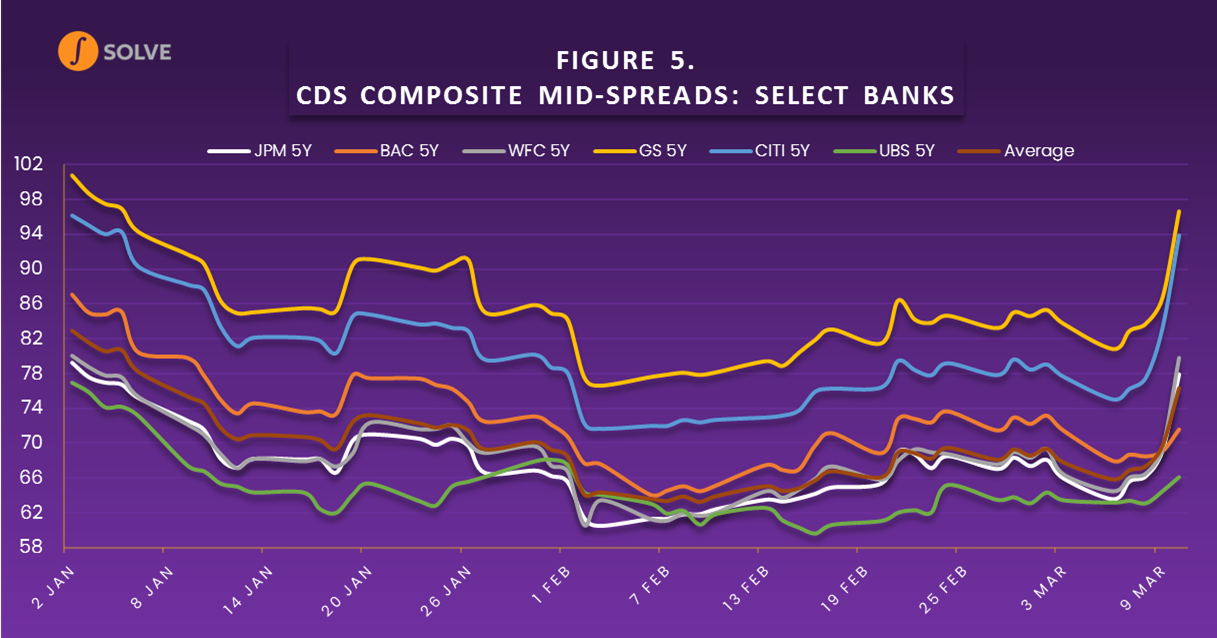
The effect of SVB’s collapse on the industry’s leading banks can be highlighted by looking at SOLVE’s Composite Data. On March 9th, following news of Silicon Valley Bank’s eminent collapse CDS mid-spreads in the banking sector experienced a sharp spike (Figure 4).
Here
Moving forward, regulators plan to protect depositors over shareholders and debtholders within the bank. Additionally, Signature Bank was seized by regulators over the weekend, potentially indicating more instability to come within the sector.
Stay up-to-date on the latest from Solve